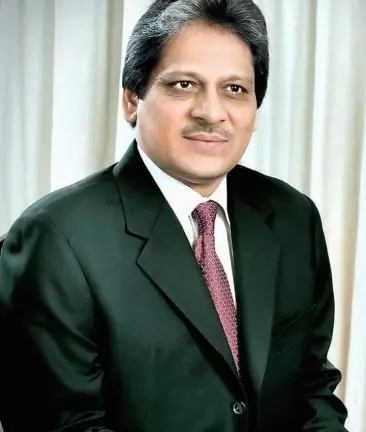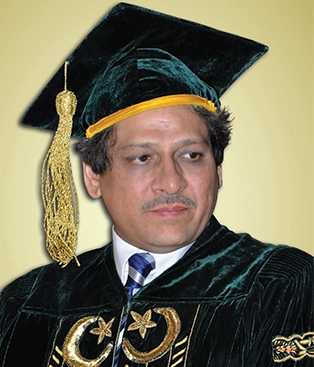
Dr. Ishrat Ul Ebad Khan is one of Pakistan’s most respected political leaders — a statesman whose career is defined by integrity, stability, and service. From his early days as a student leader to becoming Pakistan’s longest-serving governor, he has remained dedicated to public welfare, inclusive governance, and national progress.
Born and raised in Karachi, Dr. Ishrat Ul Ebad Khan began his political journey at Dow Medical College, where he led the APMSO and headed the Medical Aid Committee of the Patient Welfare Committee. His leadership soon led to election in 1990 as Member of the Provincial Assembly (MPA) from PS-81 (North Nazimabad).
He was appointed Sindh’s Minister of Housing and Town Planning in Jam Sadiq’s cabinet, later adding the Environment and Public Health Engineering portfolios. As the youngest provincial minister, he helped drive infrastructure development, including Pakistan’s first-ever flyover.
In 2002, he became Convenor of MQM to prepare for general elections. Following the elections, he was nominated as Governor of Sindh and assumed office on December 27, 2002. At 39, he became Pakistan’s youngest governor and went on to serve for an unprecedented 14 years.
During his tenure he worked constructively with three national governments, three presidents, seven prime ministers, and multiple chief ministers — fostering stability and securing strategic and financial support for Sindh’s development.
Dr. Ishrat Ul Ebad Khan is widely credited for launching one of the most ambitious urban development initiatives in Pakistan’s history — the Tameer-e-Karachi Package. This transformative program brought record-breaking infrastructure investment to Karachi, Hyderabad, and other urban centers of Sindh.
Under his leadership, significant funds were allocated for roads, flyovers, underpasses, water supply projects, sewerage upgrades, public parks, street lighting, and community spaces. These projects modernized Karachi’s infrastructure and extended progress to other major Sindh cities — creating jobs, improving mobility, and uplifting quality of life. His tenure is remembered as the most significant era of urban infrastructure growth in the province, made possible through securing and channeling federal resources into provincial development.
Beyond physical development, Dr. Ishrat Ul Ebad Khan played a central role in peacebuilding and conflict resolution. His diplomatic approach brought historically opposing political and community factions to the table, fostering dialogue and reducing tensions. Through quiet mediation and consensus-building, he bridged divides that had long hindered stability, advancing interfaith harmony, political cooperation, and community trust.
With dialogue and cooperation strengthened, he focused on restoring law and order. A defining moment was his leadership during the Karachi Operation (2013) — an impartial, decisive campaign against terrorism, militancy, and organized crime. Under his guidance, an advanced intelligence and coordination framework was created to dismantle criminal networks and disrupt their financing.
He also played a major role in shaping the National Action Plan, working closely with Pakistan’s armed forces, intelligence agencies, and security institutions to reinforce internal security. His direct involvement kept the operation free of political bias and focused on citizen safety. As a result, Karachi saw a sustained decline in crime, renewed investor confidence, and a resurgence as Pakistan’s economic engine.
Throughout his career, Dr. Ishrat Ul Ebad Khan maintained a people-first approach — addressing public grievances, initiating welfare programs, and empowering youth, women, minorities, and marginalized communities to participate in nation-building.
An alumnus of Dow Medical College, he excelled academically while engaging in music, sports, and public speaking. His passion for cricket and music remained with him even during his governorship, reflecting a balanced and approachable leadership style.
His 14-year governorship remains a benchmark for stability, reform, and diplomacy in Pakistan’s provincial politics. Today, through Meri Pehchan Pakistan, his vision is to unite the nation with integrity, inclusivity, and empowerment, ensuring that every citizen has the opportunity to thrive.
Passionate about progress, dedicated to change. Join us in redefining Pakistan’s future
Passionate about progress, dedicated to change. Join us in redefining Pakistan’s future